
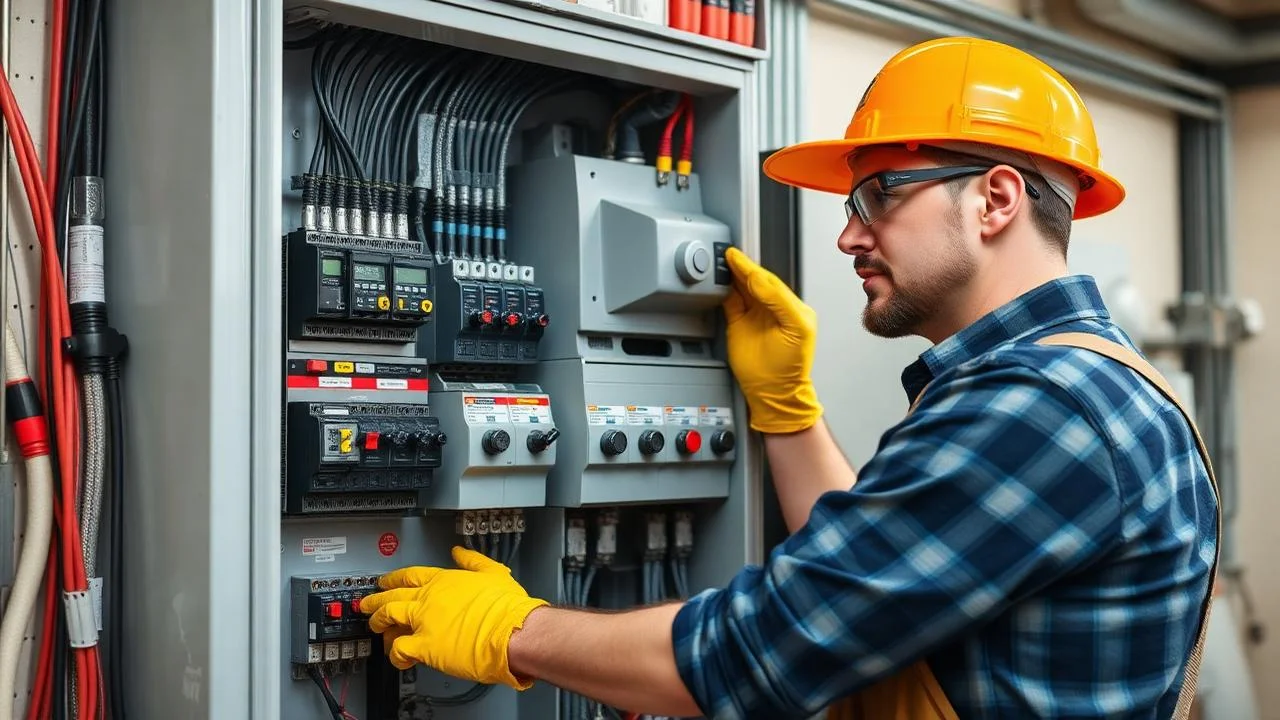
Understanding Your Electrical Panel Upgrades
Your electrical panel (breaker box) is your home’s electrical distribution hub. It receives power from the utility and distributes it through individual circuits protected by circuit breakers.
Signs You Need an Upgrade
Frequent Breaker Trips
If breakers trip regularly when using multiple appliances, your panel is overloaded. This indicates insufficient capacity for modern electrical demands.
Fuse Box Instead of Breakers
Homes with fuse boxes (common before 1960) need immediate upgrades. Fuses lack modern safety features and can’t handle current electrical loads.
Insufficient Amperage
60-amp and 100-amp panels are inadequate for modern homes. Most homes today need 200-amp service to handle appliances, electronics, and climate control systems.
Scorch Marks or Burning Smell
Visible damage, discoloration, or burning odors indicate serious electrical problems requiring immediate professional attention. This is a fire hazard.
Outdated Panel Brands
Federal Pacific, Zinsco, and Pushmatic panels have known safety issues. Many insurance companies refuse coverage for homes with these panels.
Home Additions or Renovations
Adding square footage, major appliances, EV chargers, or hot tubs often requires panel upgrades to provide adequate electrical capacity.
Benefits of Panel Upgrades
Enhanced Safety
Modern breakers respond quickly to overloads and ground faults, preventing electrical fires. AFCI (Arc Fault Circuit Interrupter) breakers detect dangerous arcing conditions before fires start.
Increased Capacity
200-amp or 400-amp panels provide capacity for modern appliances, smart home devices, home offices, and future additions like solar panels or EV chargers.
Home Value
Updated electrical systems are attractive to buyers and often required for home sales. Modern panels can increase property value by $5,000-$10,000.
Insurance Benefits
Many insurers reduce premiums for homes with modern electrical systems or require upgrades as conditions for coverage.
Modern Panel Features
AFCI Protection
Arc Fault Circuit Interrupters detect arcing conditions that cause electrical fires. Required by code for most circuits in modern homes.
GFCI Protection
Ground Fault Circuit Interrupters protect against electric shock in wet locations. Required in bathrooms, kitchens, garages, and outdoor outlets.
Surge Protection
Whole-home surge protectors install in panels to safeguard expensive electronics from lightning strikes and utility power surges.
Smart Breakers
Monitor energy usage by circuit, detect problems, and allow remote control. Valuable for energy management and identifying electrical issues.
Upgrade Costs
Standard Panel Replacement
- 100 to 200-amp upgrade: $1,500-$3,500
- 200 to 400-amp upgrade: $2,500-$5,000
- Includes panel, labor, permits, inspection
Service Upgrade
If utility service to your home needs upgrading (new meter, weatherhead, service entrance cable): Add $1,000-$2,500 to panel replacement costs.
Additional Factors
- Panel relocation: Add $500-$1,500
- Extensive rewiring: Add $2,000-$8,000
- Code compliance updates: Variable costs
- Subpanel installation: $500-$1,500 each
The Upgrade Process
1. Professional Evaluation
Licensed electrician assesses current system, determines appropriate amperage, and provides detailed quote. Inspects wiring, grounding, and circuits.
2. Permits and Utility Coordination
Electrician obtains permits and coordinates with utility company for temporary power disconnect during installation (typically 4-8 hours).
3. Installation
Old panel removal, new panel installation, circuit reconnection, and grounding updates. Work typically takes 4-8 hours but can extend to multiple days for complex jobs.
4. Inspection and Approval
Municipal inspector verifies code compliance. Only after approval does utility restore permanent power connection.
Choosing the Right Amperage
200-Amp Service
Standard for most modern homes. Handles typical appliances, HVAC, electric vehicles, and room for expansion. Adequate for homes under 3,000 square feet.
400-Amp Service
Recommended for large homes (4,000+ square feet), multiple HVAC systems, full electric appliances, EV charging, and extensive smart home systems.
DIY vs Professional Installation
Never attempt DIY panel upgrades. This is extremely dangerous work requiring licensed electricians. Improper installation causes fires, electrocution, and code violations affecting insurance and home sales.
Maintenance After Upgrade
- Test breakers annually
- Keep panel area clear (3-foot clearance required)
- Label all circuits for easy identification
- Schedule professional inspections every 5 years
- Never paint over panels or modify breakers
When to Act
Don’t delay upgrades if you experience frequent trips, burning smells, or have outdated panels. Electrical fires cause billions in damage annually. Professional evaluation costs $100-$200 and provides peace of mind.